Como Negotiate with Chinese Suppliers: Proven Strategies That Work
- ação
- Horário Edição
- 2026/9/14
Resumo
A practical Guia to negotiating with Chinese suppliers, from cultural context and preparation to the 3-quote rule and avoiding common Sinais de alerta.

Como Negotiate with Chinese Suppliers: Proven Strategies That Work
Negotiating with Chinese suppliers is the single biggest lever on your Produto cost and your long-term supply stability. With China's goods trade surplus hitting a record USD 1.2 trillion in 2025 (China Customs, 2025), the country remains the world's most competitive manufacturing base, but price is only one part of the deal. Our team at RND has spent 20+ years on the ground in Yiwu and the surrounding clusters, and this Guia shares the negotiation playbook we use for clients every day. Learn more on our About Us page.
Negotiation Is a Relationship, Not a Battle
The biggest mistake Western buyers make is treating negotiation as a zero-sum fight to be won in one email. In China, a Fornecedor you squeeze too hard on day one may quietly cut corners later, ship slower, or deprioritize your orders during peak season. The goal is a deal both sides want to repeat. A good relationship protects you when capacity is tight and gives you leverage when costs move.
Mindset shift
Aim for a fair, repeatable agreement rather than the absolute lowest price. Suppliers who respect the partnership will fight for your delivery dates when it matters most.
Cultural Context: How Chinese Business Negotiation Works
Chinese business negotiation is shaped by concepts of face (mianzi) and long-term trust (guanxi). Publicly criticizing a Fornecedor or issuing ultimatums causes loss of face and can stall talks. Decisions often flow upward through a Fabrica, so the person you email may not be the final decision maker. Patience, politeness, and consistency build the trust that unlocks better terms.
- Respect and indirect communication keep discussions open and non-confrontational.
- Senior management often approves final pricing, so allow time for internal sign-off.
- Reciprocity matters: small concessions build goodwill for bigger ones later.
- Trust is earned across multiple interactions, not in a single transaction.

Preparation: Know Your Numbers Before You Start
Before you send a single inquiry, you must know your target cost, your minimum acceptable price, and your landed-cost ceiling including freight, tariffs, and fees. Note that the U.S. reciprocal tariff on Chinese goods was reset to 10% through November 2026 (CCPIT, 2025), so your cost model should reflect the current rate, not last year's. Suppliers respect buyers who speak in precise volumes, specs, and Incoterms.
| Metric | What to pin down | Why it matters |
|---|---|---|
| Target unit price | Your ideal ex-works cost | Anchors the negotiation range |
| MOQ | Minimum order quantity | Affects per-unit pricing tiers |
| Landed cost | FOB + freight + tariff + duty | Confirms real margin |
| Lead time | Production + transit days | Plans your sell-through |
Building Rapport First, Negotiating Second
Rapport is not small talk for its own sake. A short video call, a Fabrica visit, or simply remembering a Fornecedor's name and region builds the human connection that makes tough price talks easier. Many of our best price breaks came after a client visited the workshop and the owner saw a genuine long-term partner, not just another anonymous inquiry.
Open warmly
Introduce your company, your Mercado, and your expected annual volume honestly.
Show commitment
Share a realistic forecast so the Fabrica can plan capacity for you.
Earn trust
Pay deposits on time and communicate clearly to build a track record.
Then negotiate
With trust in place, discuss price and terms from a position of partnership.
The 3-Quote Rule and Como Use It
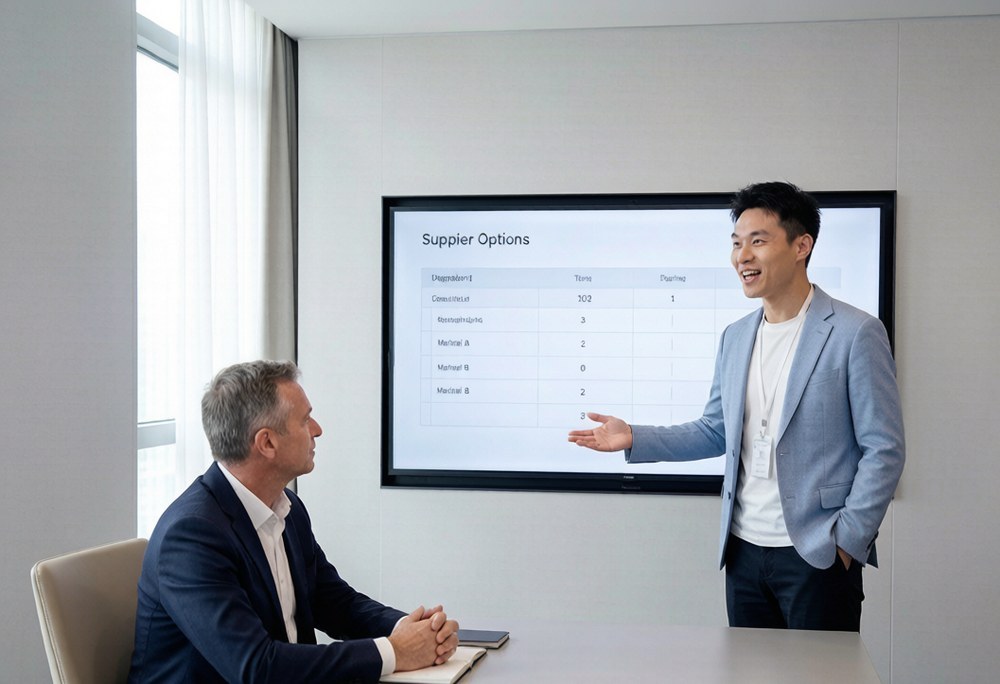
Never negotiate against one Fornecedor in isolation. The 3-quote rule means gathering at least three comparable offers for the same specification, then using them as references without disclosing exact competitor names. This gives you a Mercado-clear price and exposes outliers. It also signals to each Fabrica that you are a serious, informed buyer who will choose on value, not flattery.
Como compare fairly
Send the same detailed spec sheet to all three factories so quotes are truly comparable. Differences then reveal real cost gaps versus padding. Then send us your Produto idea and we can run this process for you.
Negotiating Price vs Quality vs Terms
The smartest negotiations trade across three variables instead of hammering only on unit price. You might accept a slightly higher price for a shorter lead time, better packaging, or more favorable payment terms. Sometimes a Fabrica cannot move on price but will add free spares, upgrade materials, or accept a 30/70 payment split. Knowing which lever matters most to your business is the real skill.
- Price: push on volume tiers and tooling amortization, not just the headline number.
- Quality: specify materials and acceptables in writing to avoid silent downgrades.
- Terms: negotiate deposit, balance, and Incoterms to protect your Fluxo de caixa.
Sinais de alerta in Fornecedor Negotiations
Certain signals warn you to slow down or walk away. A Fornecedor who refuses a Fabrica audit, won't share a business license, or pushes you to pay 100% upfront is a risk. Vague answers about certifications, sudden price drops below Mercado, or pressure to skip a contract are all warning signs. Independent inspection and verified documentation are your safety net.
How RND Negotiates Better Prices for Clients
RND Sourcing is a Yiwu-based agent with 20+ years inside China's manufacturing clusters and a vetted Fabrica network built over thousands of orders. Because we consolidate volume across clients and work with transparent, fixed fees, we have no incentive to steer you to a Fornecedor who pays us a kickback. We run the 3-quote comparison, Verificar credentials, and negotiate from real Mercado data so you get a defensible price.
Why it works
We earn a flat service fee, never a Fornecedor commission. That means our only incentive is the best total deal for you. See our Produto categories for examples of what we source.

Conclusion
Negotiating with Chinese suppliers rewards preparation, patience, and partnership over aggression. Know your numbers, build rapport, compare three quotes, and watch for Sinais de alerta. With the right process, you protect both your margin and your supply chain. When you are ready, send us your Produto idea and our team will start the negotiation on your behalf.
How do I get the best price from a Chinese Fabrica?
Gather at least three comparable quotes for the same spec, know your landed-cost ceiling, and negotiate across price, quality, and payment terms rather than focusing only on unit cost.
Why is rapport important in Chinese Fornecedor negotiation?
Trust (guanxi) shapes how factories prioritize orders, share capacity, and accommodate requests. A Fornecedor who sees you as a long-term partner will protect your delivery dates during peak season.
What are the biggest Sinais de alerta when negotiating?
Requests for 100% upfront payment, refusal to allow Fabrica audits, missing business licenses, and vague certification answers all signal risk and warrant caution.
Should I visit the Fabrica in person?
A visit builds trust and lets you Verificar capabilities firsthand. If travel is not possible, use a local agent like RND to conduct the audit and negotiation on your behalf.
How does RND make money without Fornecedor kickbacks?
RND charges clients a transparent fixed service fee and accepts no Fornecedor commissions, so our incentive is always the best total deal for the buyer, not the highest Fabrica markup.
Negotiation is a skill you can systematize. Start with preparation and partnership, and let our team help you secure fairer, more reliable Fornecedor terms from China.
Work With RND Sourcing
RND Sourcing is your on-the-ground sourcing team in Yiwu, helping global buyers find reliable factories, negotiate better terms, and ship with confidence. For a free, no-obligation consultation, visit yourchinagent.com.